Innovation Sensemaking. A practical way.

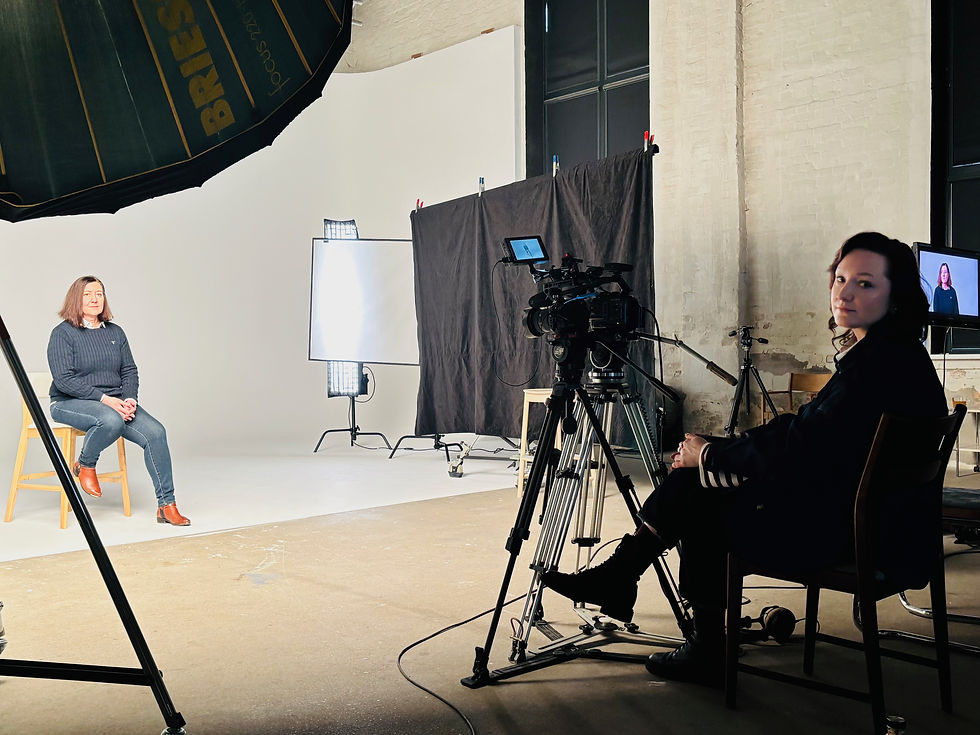
Directing interview within EU-funded project on social innovation. Through this work, I have met truly inspirational innovators across the EU.
Innovation sensemaking. These two words can mean many things. My lens on innovation and research-led work is lived experience and the insight of the people it is meant to serve or involve. The aim is to understand what that work means outside its own field, in a broader industry and societal context.
Why is this needed? Because when you start engaging with others and share what you do, whether investors, policymakers, or public, there comes a point where it needs to be understood differently. Not in technical or niche terms, but in terms of relevance and meaning. This is where sensemaking becomes necessary. It is about being able to convey what your work changes, how it connects to people’s lives.
Over the past year, I have been in conversations and collaborations with people working in life science. In this field, sensemaking becomes very practical. It is needed when attracting funding, engaging stakeholders, and helping others understand what is unique about the work by placing it in a real-world context.
With 20 years in filmmaking in different roles, I always try to find a way to integrate it into my work. No matter the type of endeavour. Be it my consultancy, NGO work or EU scale innovation project development. Also within life science field
I recommend to use it. I have seen many times how people change their understanding when this medium is used, whether in business, education, or other fields.
When we hear someone speak about their work, the issues that trigger them, or the people they are trying to help, something changes. We don’t just process information, we sense intention, effort, and lived experience. We engage parts of the brain linked to emotion, memory, and empathy. We remember it more, and we engage more deeply.
When I mentioned this format as a way to engage stakeholders, I'm often asked what it involves in practice. So I will describe it briefly, as this may also be relevant for you.
The process moves through three stages.
We sit down for one or two in-depth conversations. You share your reasons for doing this work, your thinking, your vision, and the challenges you face. I go through this with you, do my own research and analysis, and come back with my perspective on what your work is truly about, with a specific focus on its industry and societal impact.
We look at people. Who needs to be part of this? This can be you as a founder or researcher, but also partners, collaborators, or those you are working with or aiming to support. We decide who can best place the work in a clear context.
We film. This can be done on a small scale, with me developing the concept and directing, and a cinematographer filming and editing. Depending on the budget, we choose a location, preferably one that holds symbolic meaning. It can be the place where the idea was born, where the team is working, or somewhere that holds personal or societal significance. I direct the conversation so it stays focused and guide it so it unfolds naturally, without the need to memorise a script. Because we prepare in advance, I know what needs to be covered. I ask additional questions to get to what matters, and then refine it in the editing.

Filming a tutorial about innovation
The result is material you can use across different situations. When you present your work, apply for funding, bring in partners, onboard stakeholders, or speak at events. It also reduces the time and effort needed to explain your work repeatedly.
The format can vary. It can be filmed conversations, written interviews or articles.
What matters is clarity. Clarity means identifying what others need to understand about your work and making that visible in a way that people can engage with
and trust.
This is one way I approach sensemaking in practice.


